Rebuilding the Moderation Feedback pipelineFor Mod Developers

Curseforge is a UGC platform hosting millions of mods of 20+ games,
entirely powered by the mod developers.

Every project uploaded to CurseForge goes through review by our Moderators
before it goes live, checking for safety and quality.

A-Z product research & design // cross-teams collab // b2b • saas // 2026 q1-q2

+3new features: statuses, notifications, quick guidelines
increase in critical-content visibilityincrease in critical-content visibility
reduction in moderation-related
tickets & ARTreduction in moderation-related tickets & ART
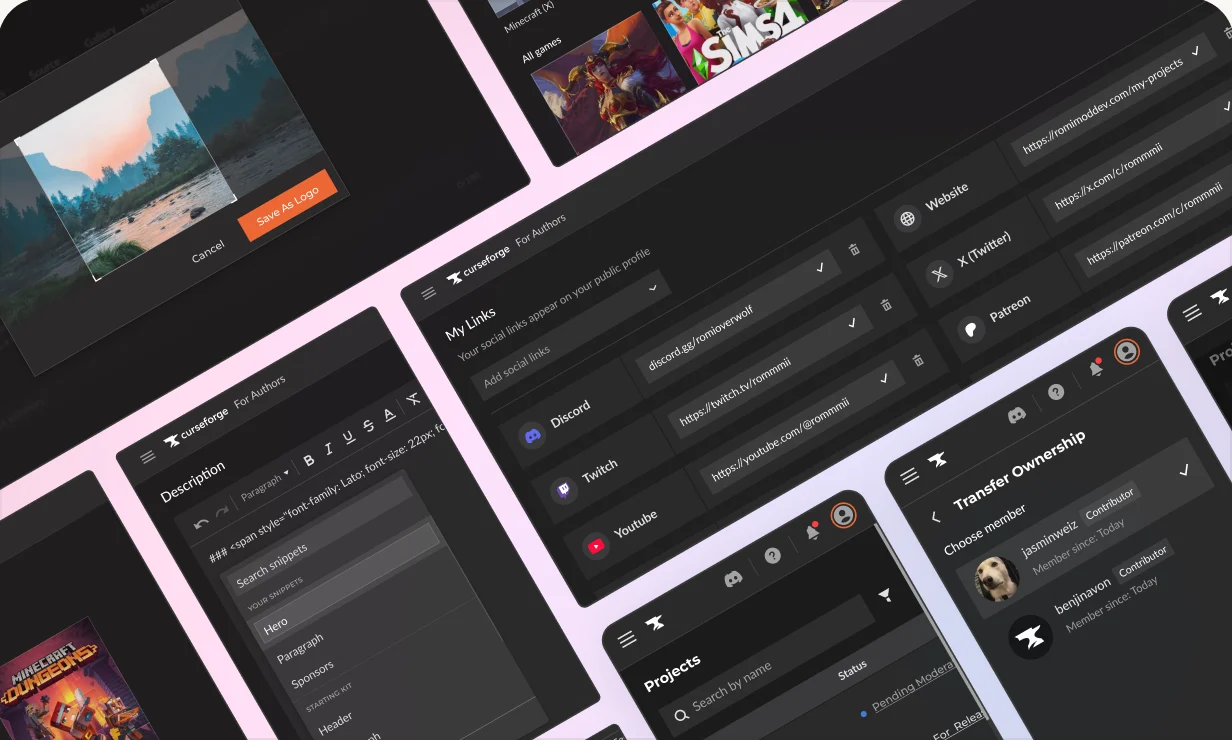
Authors Console with project statuses and moderation feedback

problem statement

Guidelines update revealing a broken process

In the Curseforge Authors Console, the product team focus on product improvements, while the moderation team handles all of the users’ project submissions and issues.

This results in a gap between the moderation process and how we present it throughout the console, which was brought up as a mere “copytext issue” requiring a simple text refresh.

research findings

Developers complaining on moderation clarity

From recent user interviews, it surfaced that Developers lacked clarity around publication timelines and what was required of them after a rejection or edit request from moderators.

However, strong satisfaction with moderator feedback and response times suggested the issue isn’t the moderation team’s project handling, but process clarity within the console.

research pivot

Recurring issues seen in support tickets

Unsatisfied with a simplified solution to a bigger problem, I asked our Moderators to walk me through project rejections and developers’ tickets from the past 3 months.

The recurring themes made it clear: the issue wasn't just ambiguous labels and CTAs, but critical feedback getting missed, and project status updates that are easy to lose track of.

Guidelines confusion

Developers didn't know the rules clearly enough before submitting. Many guidelines existed only as community word-of-mouth, not in the product.

Poor project status visibility

After submitting, developers had no reliable way to track the state of their project while working on it.

Unclear feedback

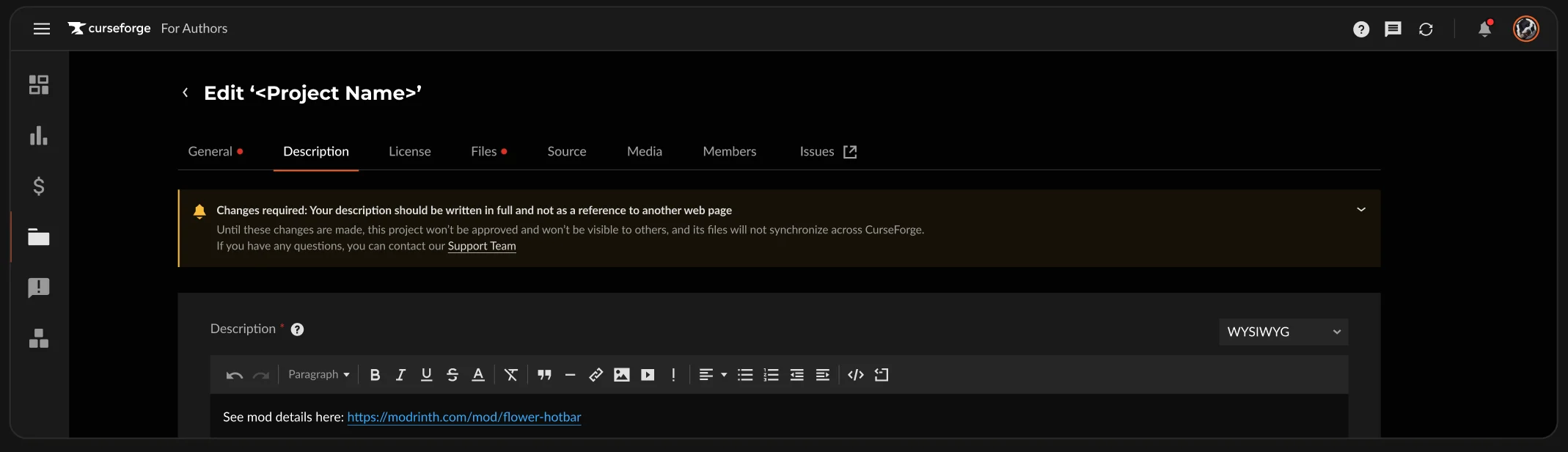
When changes were required, developers often didn't know what to fix or where to find that information.

planning

Tight cross-team collaboration from A-Z

After presenting the findings to stakeholders, I got the green light to extend the project’s scope to reimagining problem areas: project submission, changes required by moderation, and publication timeline.

The way we present moderation guidelines is critical - one small mistake could cause an increase in ticket volume, delay project releases, and damage developers’ revenue. I structured this project to involve the Moderation team in key points.

Research and ticket analysis

Reviewed moderation tickets with the team and identified volume and themes across problem areas.

Stakeholder alignment

Presented findings with data and screenshots to get buy-in for the extended scope.

Content collaboration

Worked with the moderators to write clear statuses and moderation updates and improve the guidelines article according to our policy.

Phased release and QA

Shipped in phases with careful QA at each stage, reviewing both implementation and content accuracy across games.

A recurring challenge was that guidelines vary by game, so content solutions had to be flexible enough to handle different rule sets without creating inconsistency.

challenge

Guidelines for over 50 games

With more than 50 games on CurseForge, creating and maintaining detailed guidelines for every game wasn’t practical.

At the same time, we heard from developers that some of the existing tips felt too generic, making them easier to disregard altogether.

Together with the Moderation team, we decided to focus our efforts on the top 4 games, while removing redundant tips and rewriting the general guidance that remained to be more straightforward and useful.

Guidelines vary by game, so content solutions had to be flexible enough to handle different rules, without creating inconsistency.

solution

Clear, accurate, and actionable information

The changes addressed each of the three problem areas: Guidelines, project status, and moderation feedback. They were released in phases rather than one big launch, which let us catch issues early and adjust along the way.

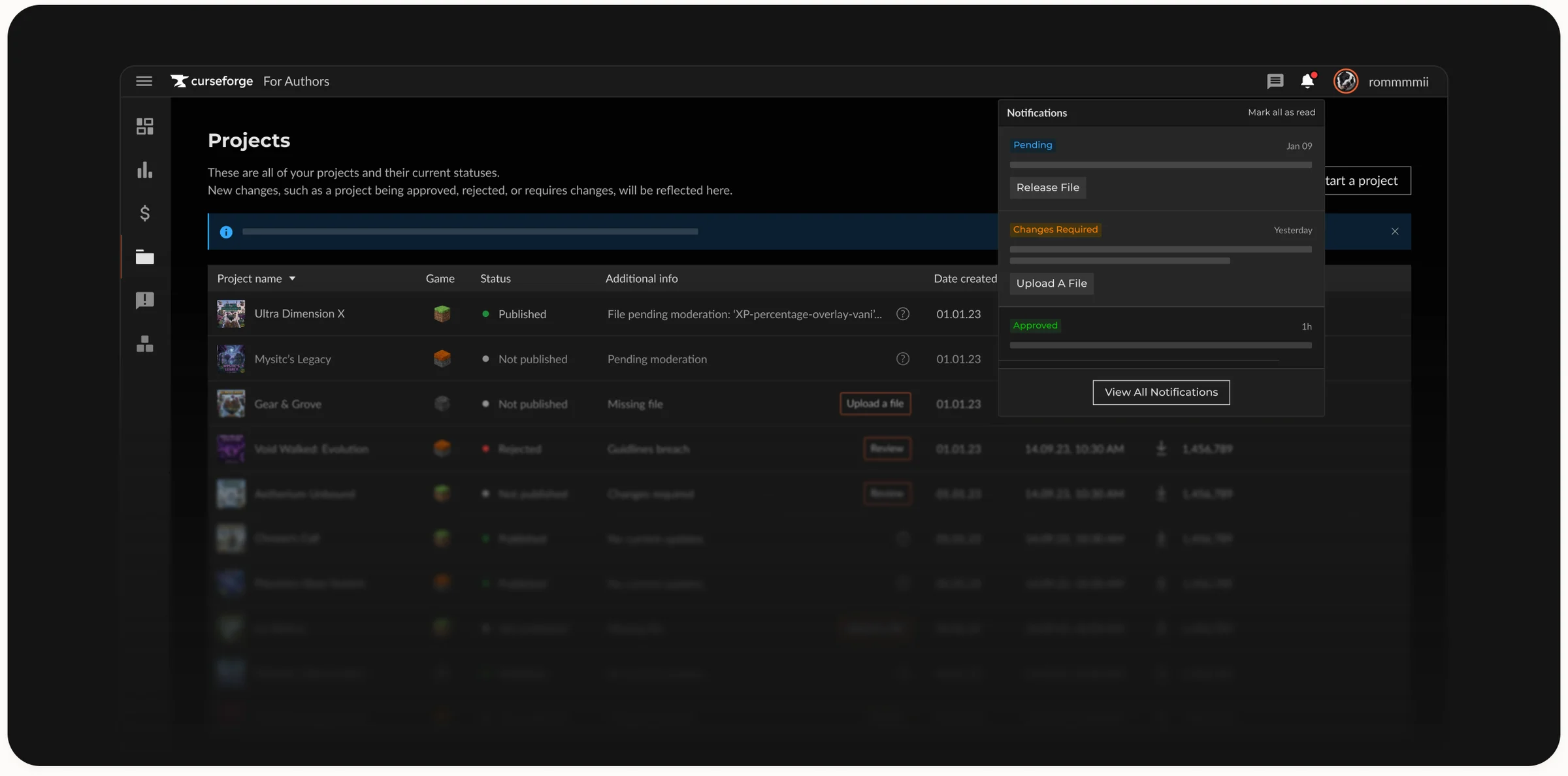
Notification and table actions

improvement

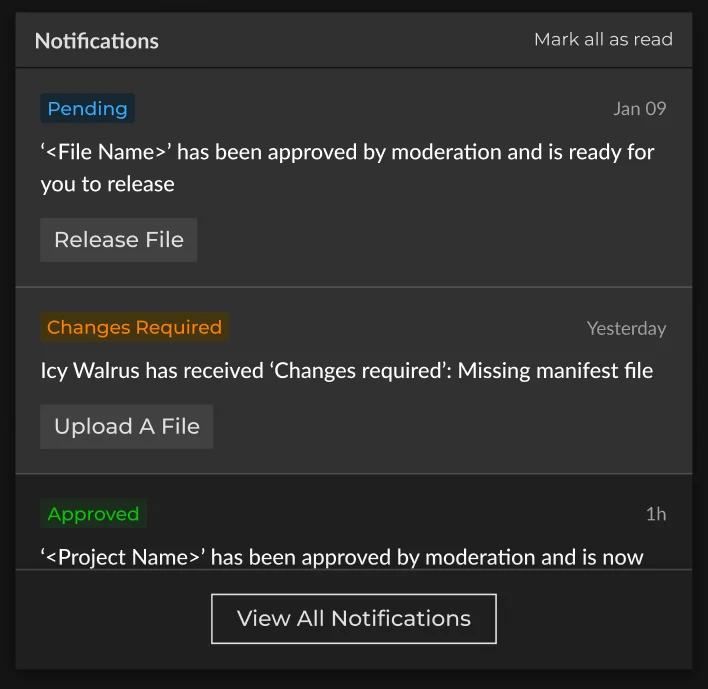
Notifications used to be passive - they told developers something had changed but gave them no direct way to act. Adding contextual actions cuts down the steps between receiving feedback and responding to it.

  • ‘Release File’ and ‘Review Moderation Message’ were added as notifications
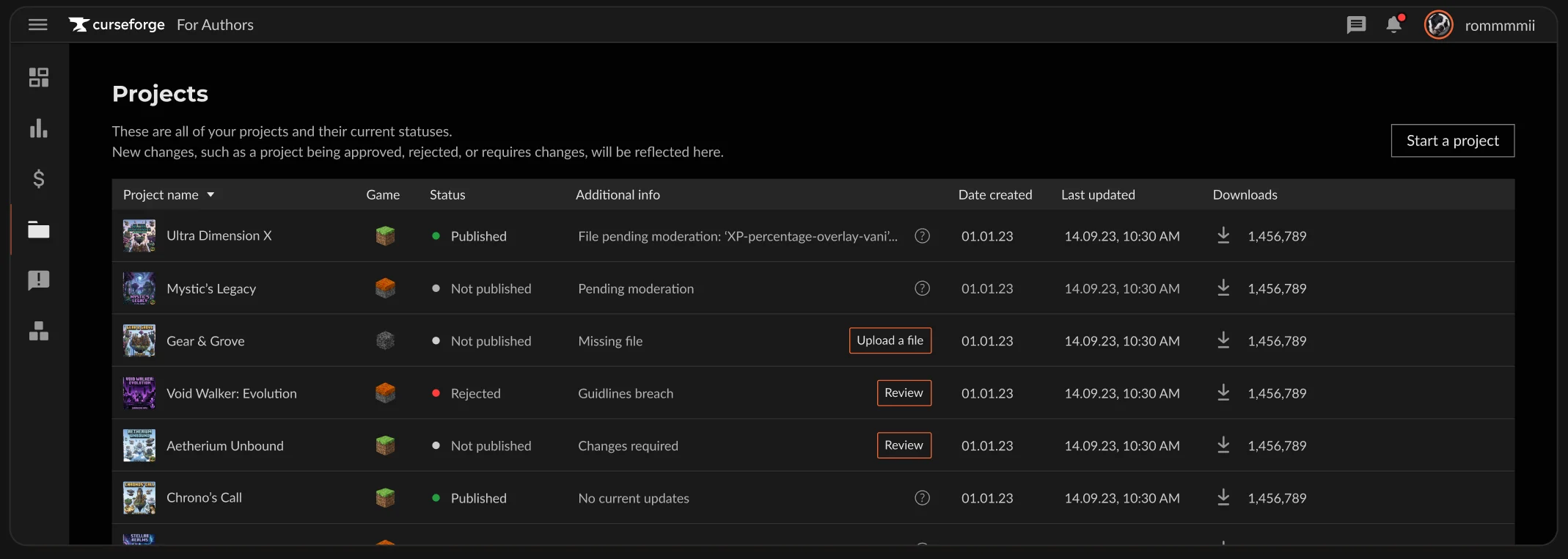
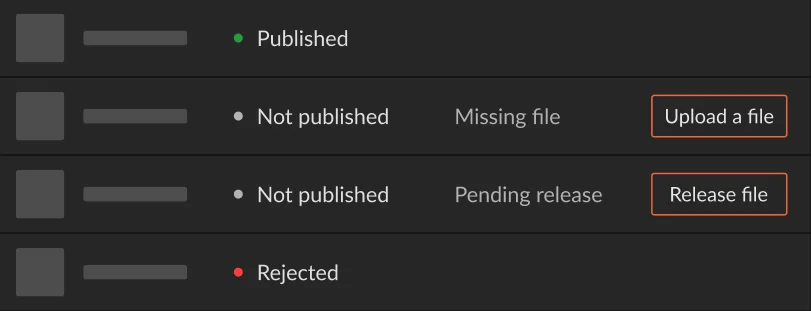
  • 6 statuses merged distinctively: Published, Not published, Rejected (can’t be published)
  • Table quick actions
Projects page with statuses and quick actions
projects page
Notifications panel with actions
notifications panel
Project statuses and actions
statuses & actions

Guidelines, updates, and status toasts

new feature

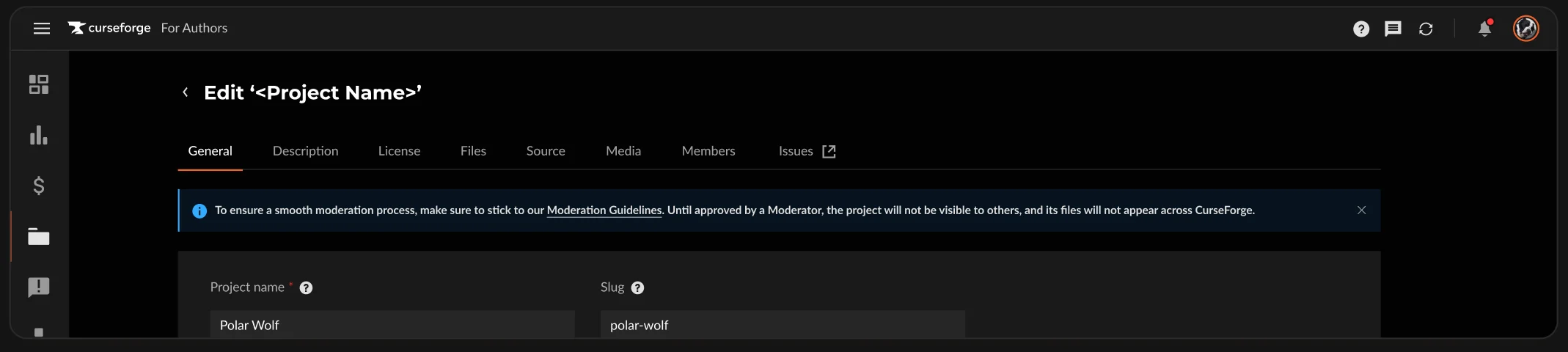
A persistent info toast at the top of project tab pages links developers to the moderation guidelines before submission. Updates and status toasts show for submitted and published projects.

  • Guidelines are visible throughout the whole project creation and edit flow, not only on the submission
  • Links to the new updated guidelines article, written in collaboration with the Moderation team
  • Same toast pattern to flag project status updates in the live project page
New project info toast
new project info toast
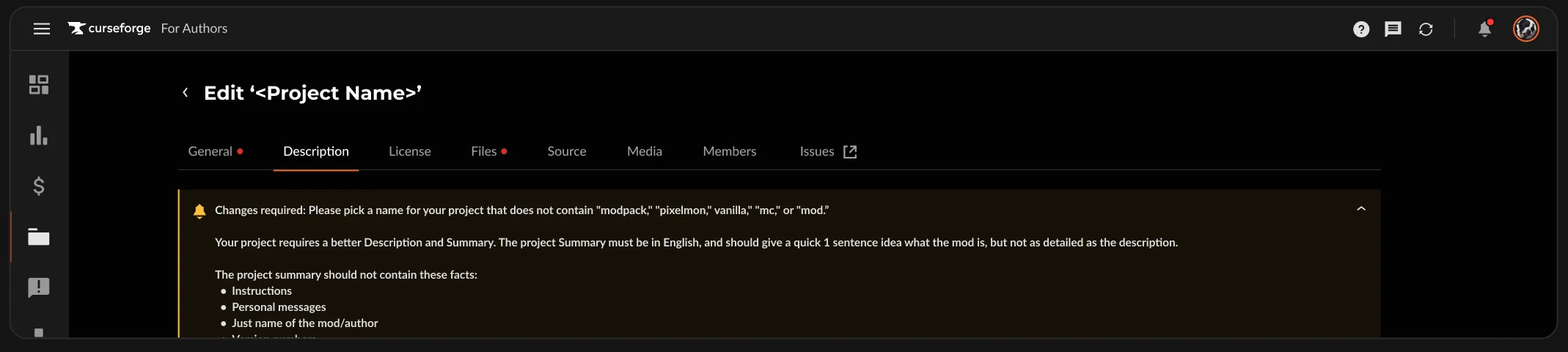
Moderation feedback toast, expandedModeration feedback toast
moderation feedback toast
Status update on the public project page
status update in the website project page

outcome

Increased confidence = reduced ticket volume

The release was phased across several months. The clearest signal came from the Moderation team: the volume of tickets from developers who didn't understand the guidelines or what changes were needed dropped significantly after the changes shipped.

Reduced moderation tickets

Significant reduction in moderation support tickets around feedback and timelines.

Reduced ART
(Average Resolution Time)

Notably less back-and-forth with developers per ticket

Increased guidelines visibility

Critical moderation guidelines previously hidden in tooltips and edge cases is now clearly visible.

From the moderation team: In addition to a drop in projects needing tweaks, developers that do receive feedback have less questions, meaning they understand what needs to be fixed.

reflection

Separating user stories would’ve saved time

The component work and the content changes should have been two separate stories. Combining them made the review process harder than it needed to be.

At that scale of change, splitting them would have kept QA more manageable and feedback more focused.

Aligning with PM more frequently throughout changes to the project would result in better user stories division and efficient QA.